- Teacher: Saurabh Kapoor
- Teacher: Admin User
- Teacher: Dr. Ashok Verma
- Teacher: Prof. Vikash Verma
Search results: 192
- Teacher: Anubha Thakur
Category: APPLIED ECONOMICS GROUP HONOURS
Scope: The course deals with the various physical and physicochemical properties, and principles involved in dosage forms/formulations. Theory and practical components of the subject help the student to get a better insight into various areas of formulation research and development, and stability studies of pharmaceutical dosage forms.
Objectives: Upon the completion of the course student shall be able to
1. Understand various physicochemical properties of drug molecules in the designing the dosage forms
2. Know the principles of chemical kinetics & to use them for stability testing and determination of expiry date of formulations
3. Demonstrate use of physicochemical properties in the formulation development and evaluation of dosage forms.
- Teacher: dr. kaminee sahu drkaminee sahu
- Teacher: Devendra Lodhi
Category: B.Pharm IV
Unit-I
Controlled drug delivery systems: Introduction, terminology/definitions and
rationale,advantages, disadvantages, selection of drug candidates. Approaches
to design controlled release formulations based on diffusion, dissolution and ion
exchange principles. Physicochemical and biological properties of drugs
relevant to controlled release formulations
Polymers: Introduction, classification, properties, advantages and application of
polymers in formulation of controlled release drug delivery systems.
Microencapsulation: Definition, advantages and disadvantages, microspheres
/microcapsules, microparticles, methods of microencapsulation, applications
Mucosal Drug Delivery system: Introduction, Principles of bioadhesion /
mucoadhesion, concepts, advantages and disadvantages, transmucosal
permeability and formulation considerations of buccal delivery systems
Implantable Drug Delivery Systems:Introduction, advantages and
disadvantages, concept of implantsand osmotic pump
Unit-III
Transdermal Drug Delivery Systems: Introduction, Permeation through skin,
factors affecting permeation, permeation enhancers, basic components of
TDDS, formulation approaches
Gastroretentive drug delivery systems: Introduction, advantages,
disadvantages, approaches for GRDDS – Floating, high density systems,
inflatable and gastroadhesive systems and their applications
Nasopulmonary drug delivery system: Introduction to Nasal and Pulmonary
routes of drug delivery, Formulation of Inhalers (dry powder and metered dose),
nasal sprays, nebulizers
Unit-IV
Targeted drug Delivery: Concepts and approaches advantages and
disadvantages, introduction to liposomes, niosomes, nanoparticles, monoclonal
antibodies and their applications
Unit-V
Ocular Drug Delivery Systems: Introduction, intra ocular barriers and
methods to overcome –Preliminary study, ocular formulations and ocuserts
Intrauterine Drug Delivery Systems: Introduction, advantages and
disadvantages, development of intra uterine devices (IUDs) and applications
- Teacher: Devendra Lodhi
Category: B.Pharm VII
Scope: The course deals with the various physicaL and physicochemical properties, and principles involved in dosage forms/formulations. Theory and practical components of the subject help the student to get a better insight into various areas of formulation research and development, and stability studies of pharmaceutical dosage forms.
Objectives: Upon the completion of the course student shall be able to Understand various physicochemical properties of drug molecules in the designing the dosage forms Know the principles of chemical kinetics & to use them for stability testing and determination of expiry date of formulations Demonstrate use of physicochemical properties in the formulation development and evaluation of dosage forms.
- Teacher: dr. kaminee sahu drkaminee sahu
- Teacher: Devendra Lodhi
Category: B.Pharm III
Scope:This subject is designed to impart knowledge and skills necessary for dose calculations, dose adjustments and to apply Biopharmaceutics theories in practical problem solving. Basic theoretical discussions of the principles of Biopharmaceutics and pharmacokinetics are provided to help the students’ to clarify the concepts.
Objectives: Upon completion of the course student shall be able to: 1. Understand the basic concepts in biopharmaceutics and pharmacokinetics. 2. Use plasma data and derive the pharmacokinetic parameters to describe the process of drug absorption, distribution, metabolism and elimination. 3. Critically evaluate biopharmaceutic studies involving drug product equivalency 4. Design and evaluate dosage regimens of the drugs using pharmacokinetic and biopharmaceutic parameters. 5. detect potential clinical pharmacokinetic problems and apply basic pharmacokinetic principles to solve them
- Teacher: Devendra Lodhi
Category: B.Pharm VI
Scope:Thiscourseisdesignedtoimpartafundamentalknowledgeonthepreparatorypharmacywith arts and science ofpreparingthe different conventional dosage forms.
Objectives:Upon completion of this course the student should be able to:
Know the history of profession of pharmacyUnderstandthebasicsofdifferentdosageforms,pharmaceuticalincompatibilitiesandpharmaceuticalcalculationsUnderstand the professional way of handling the prescription
Preparation of various conventional dosage forms
- Teacher: Devendra Lodhi
- Teacher: Sanjay Nagdev
- Teacher: Stuti Pandey
Category: B.Pharm I
- Scope: This subject deals with the application of instrumental methods in qualitative and quantitative analysis of drugs. This subject is designed to impart a fundamental knowledge on the principles and instrumentation of spectroscopic and chromatographic technique. This also emphasizes on theoretical and practical knowledge on modern analytical instruments that are used for drug testing.
Objectives: Upon completion of the course the student shall be able to .
1. Understand the interaction of matter with electromagnetic radiations and its applications in drug analysis.
2. Understand the chromatographic separation and analysis of drugs.
3. Perform quantitative & qualitative analysis of drugs using various analytical instruments.
UNIT –I 10 Hours UV Visible spectroscopy Electronic transitions, chromophores, auxochromes, spectral shifts, solvent effect on absorption spectra, Beer and Lambert’s law, Derivation and deviations. Instrumentation - Sources of radiation, wavelength selectors, sample cells, detectors- Photo tube, Photomultiplier tube, Photo voltaic cell, Silicon Photodiode. Applications - Spectrophotometric titrations, Single component and multi component analysis Fluorimetry Theory, Concepts of singlet, doublet and triplet electronic states, internal and external conversions, factors affecting fluorescence, quenching, instrumentation and applications .
UNIT –II 10 Hours IR spectroscopy Introduction, fundamental modes of vibrations in poly atomic molecules, sample handling, factors affecting vibrations Instrumentation - Sources of radiation, wavelength selectors, detectors - Golay cell, Bolometer, Thermocouple, Thermister, Pyroelectric detector and applications Flame Photometry-Principle, interferences, instrumentation and applications 144 Atomic absorption spectroscopy- Principle, interferences, instrumentation and applications Nepheloturbidometry- Principle, instrumentation and applications
UNIT –III 10 Hours Introduction to chromatography Adsorption and partition column chromatography-Methodology, advantages, disadvantages and applications. Thin layer chromatography- Introduction, Principle, Methodology, Rf values, advantages, disadvantages and applications. Paper chromatography-Introduction, methodology, development techniques, advantages, disadvantages and applications Electrophoresis– Introduction, factors affecting electrophoretic mobility, Techniques of paper, gel, capillary electrophoresis, applications.
UNIT –IV 08 Hours Gas chromatography - Introduction, theory, instrumentation, derivatization, temperature programming, advantages, disadvantages and applications High performance liquid chromatography (HPLC)-Introduction, theory, instrumentation, advantages and applications.
UNIT –V 07 Hours Ion exchange chromatography- Introduction, classification, ion exchange resins, properties, mechanism of ion exchange process, factors affecting ion exchange, methodology and applications Gel chromatography- Introduction, theory, instrumentation and applications Affinity chromatography- Introduction, theory, instrumentation and applications.
Recommended Books (Latest Editions)
1. Instrumental Methods of Chemical Analysis by B.K Sharma
2. Organic spectroscopy by Y.R Sharma
3. Text book of Pharmaceutical Analysis by Kenneth A. Connors
4. Vogel’s Text book of Quantitative Chemical Analysis by A.I. Vogel
5. Practical Pharmaceutical Chemistry by A.H. Beckett and J.B. Stenlake
6. Organic Chemistry by I. L. Finar
7. Organic spectroscopy by William Kemp
8. Quantitative Analysis of Drugs by D. C. Garrett
9. Quantitative Analysis of Drugs in Pharmaceutical Formulations by P. D. Sethi
10. Spectrophotometric identification of Organic Compounds by Silverstein
- Teacher: Dr. MeghaVerma@ggits.org meghaverma
Category: B.Pharm VII
What Is Computer Engineering?
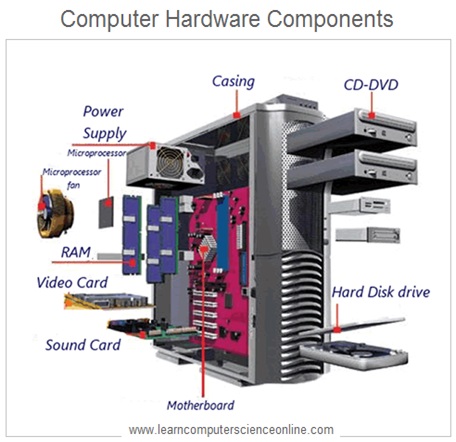
Computer Engineering combines the fields of electrical engineering and computer science to create new computer hardware and software. They're involved in the design of computer architecture and function across roles as software and hardware engineers. This field deals not necessarily with the virtual world we see but the physical components of computers systems. Computer engineering is responsible for the rise of microchips, powerful processors held within our hands (hello iPad), and the race to artificial intelligence robotics and nano-processors.
Learn Computer Engineering
Building a career in computer engineering requires a solid foundation in hardware, software, operating systems, computer architecture, electrical engineering, and a variety of subdisciplines. Computer engineers make sure the physical and virtual systems integrate seamlessly. You need an intimate understanding of computer systems to build your career and to be on the front end of innovation.
Courses And Certifications For Computer Engineering
Cisco Networking Academy Builds IT Skills & Education For ...
https://www.netacad.com has a wide variety of courses in disciplines required for a career in Computer Engineering. Several courses introduce both the fundamentals and advanced skills needed for Software engineering. Others build skills in operating systems and computer architecture.
Explore A Career In Computer Engineering
Computer Engineering will require advanced degrees in computer programming, information technology, digital systems, or similar disciplines. Software developers need a range of skills, and electronics engineers need hands-on experience in building safe and effective physical systems. Software development and computer hardware are at the forefront of changing history, so building your skills puts you at an advantage to break into this lucrative field. According to the Bureau of Labor Statistics, the job is expected to grow steadily and continue to pay salaries well above six figures. As software systems get more complex, it's up to electrical and computer engineering to solve discrepancy and innovate solutions to real-world problems. Whether you're an engineering major now or are a self-taught software engineer, build your skills and get experience to ignite your career in computer engineering.
- Teacher: Shweta tiwari shwetatiwari
Category: EE II SEM
- Teacher: Ranu Sahani
Category: CE II SEM
Category: IoT IISEM

- Teacher: shivendu dubey
Category: DS1